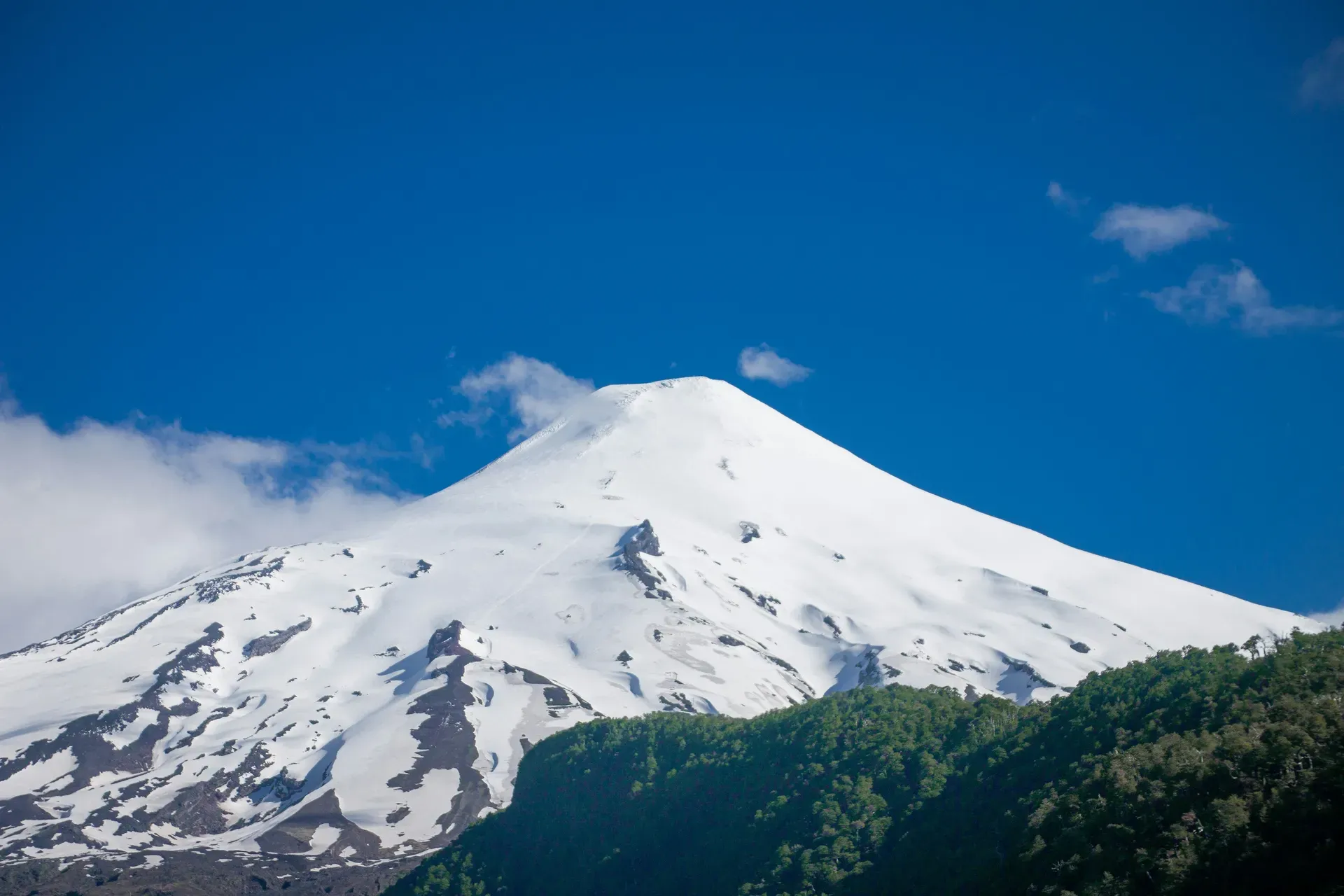
Rising 2,847 meters above the Chilean Lake District, Villarrica Volcano holds a 40-square-kilometer glacier and a 200-meter-wide active crater. A demanding 7 to 9-hour guided hike leads to the summit to view sulfurous fumaroles and an intermittent 1,250°C lava lake, concluding with a rapid sled descent down the snowy slopes.
Find Guided ToursVillarrica Volcano, known to the local Mapuche people as Rucapillán or "House of the Great Spirit," stands at an elevation of 2,847 meters in Chile's southern Lake District. Located just outside the town of Pucón, this towering stratovolcano covers approximately 400 square kilometers. It is easily recognized by its near-perfect conical shape and a prominent permanent glacier that spans 40 square kilometers across its upper slopes.
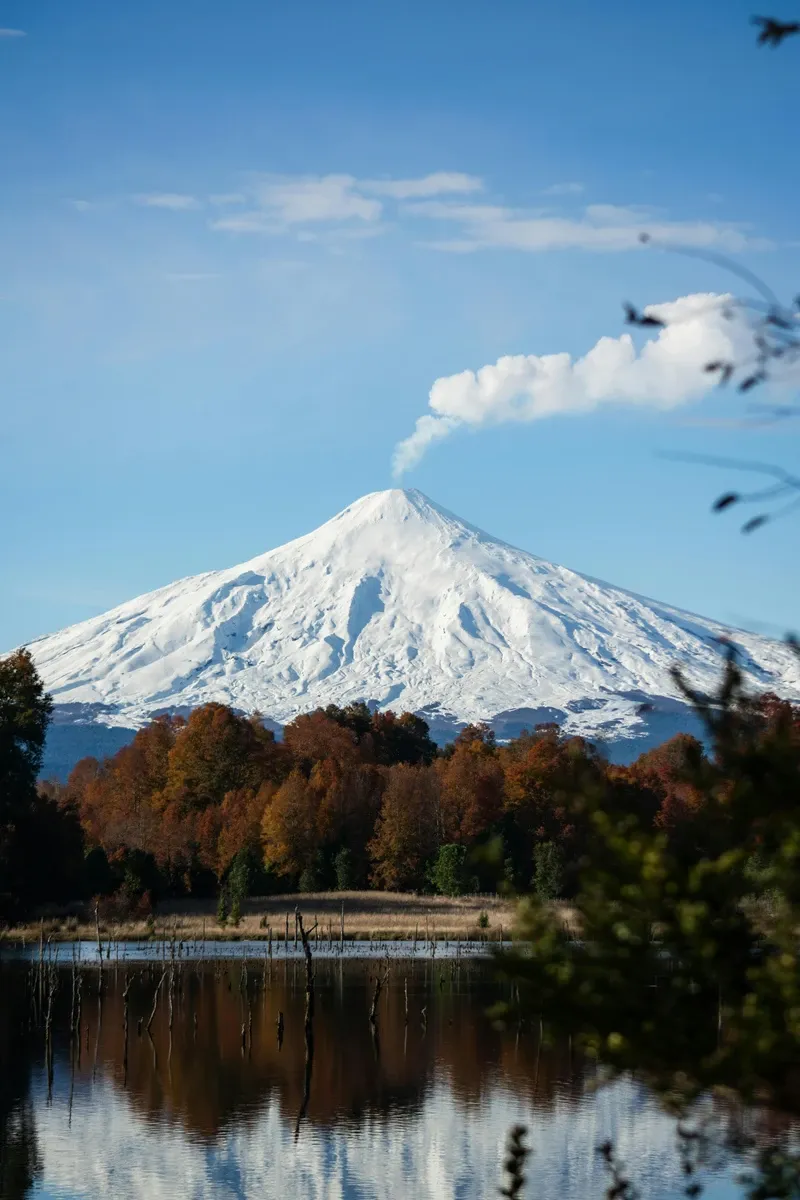
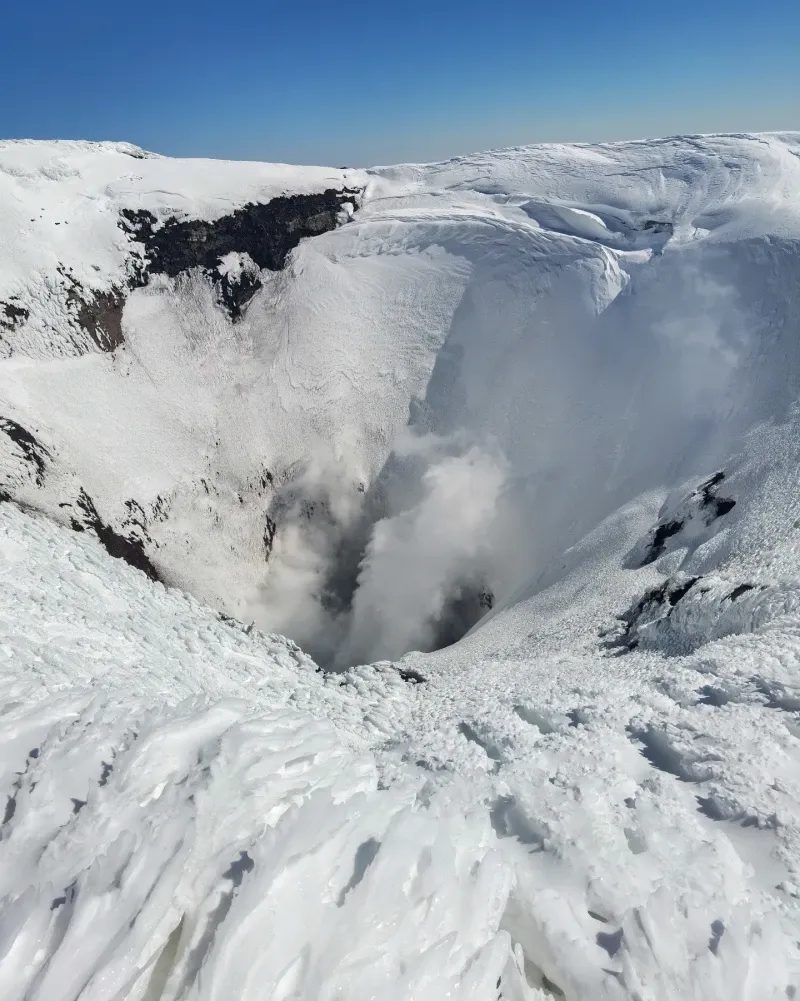
The mountain is widely recognized as South America's most active volcano. It is also one of the few volcanoes worldwide to maintain an intermittent lava lake within its active crater. The crater measures 200 meters in diameter, with subterranean lava temperatures reaching up to 1,250°C. Constant sulfurous fumaroles vent from the summit, creating a highly visible plume that dominates the regional skyline.
Villarrica has a long and volatile recorded history dating back to 1558. Throughout the 20th century, a series of significant eruptions altered the surrounding geography. Major volcanic events occurred in 1948, 1964, and 1971. The 1971 eruption was particularly severe, generating a massive lahar that swept down the mountain's flanks.
The volcano remains highly active today. Its most recent major eruption took place on March 3, 2015. This explosive event forced the immediate evacuation of thousands of nearby residents and led to the temporary closure of all hiking routes. Currently, the National Geology and Mining Service (SERNAGEOMIN) continuously monitors the mountain, adjusting the volcanic alert level to ensure the safety of climbers and surrounding communities.
Discover the full history and cultural significance on our About page.
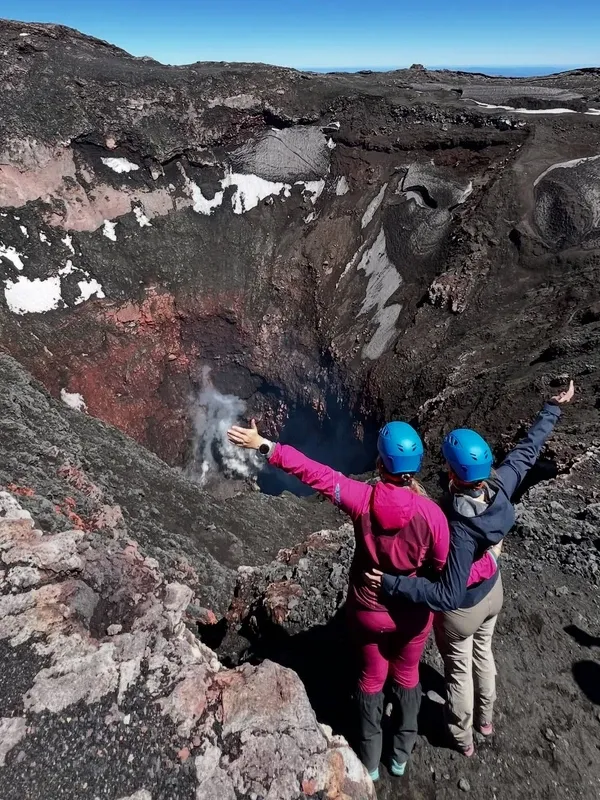
Stand on the rim of a 200-meter-wide active crater to observe sulfurous fumaroles. Villarrica is one of the few volcanoes worldwide with an intermittent lava lake, reaching temperatures around 1,250°C. Gas masks are provided to safely view the glow of the magma.
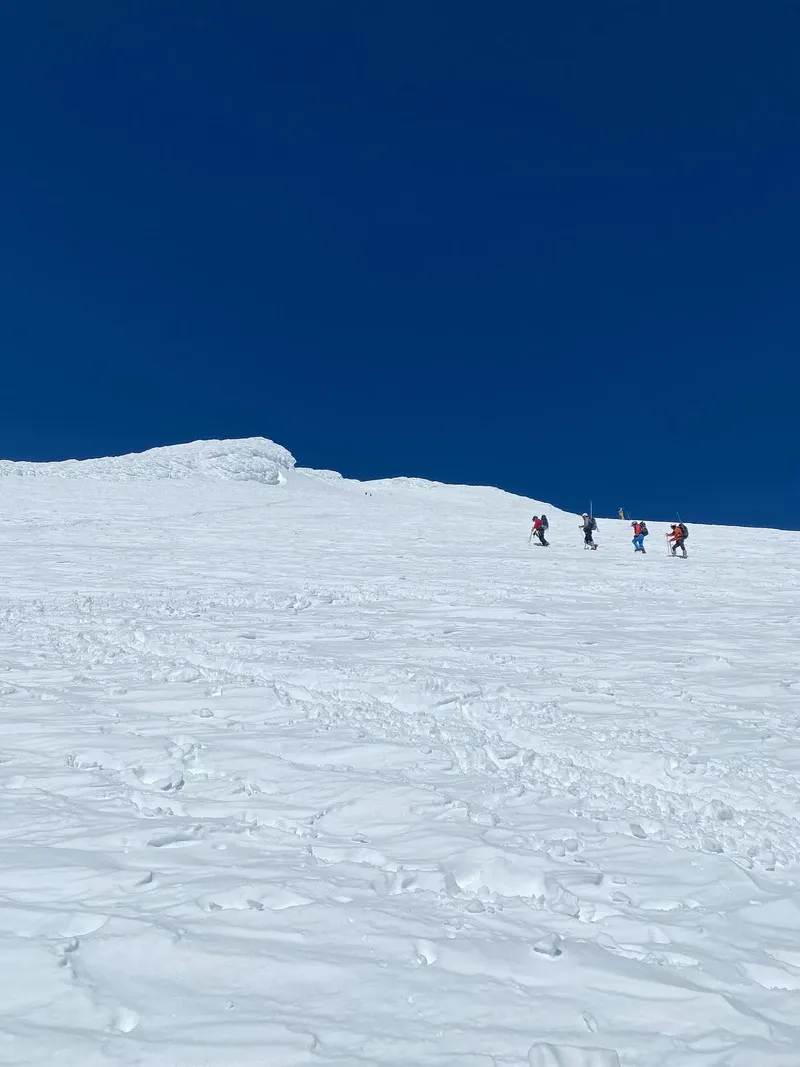
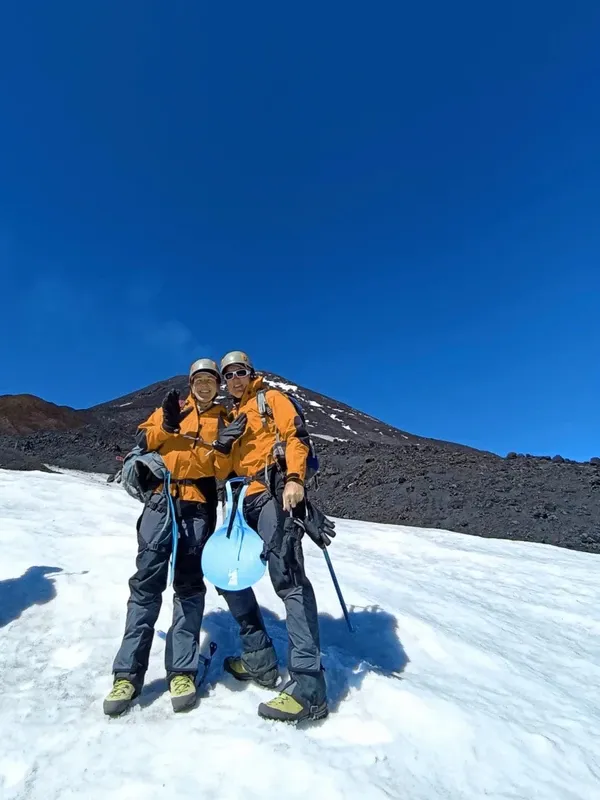
The descent from the 2,847-meter summit involves sliding down the snowy slopes on small plastic sleds. This rapid descent across the 40-square-kilometer glacier requires climbers to use an ice axe as a brake. It provides a highly unique way to return to the base.
Reaching the top reveals sweeping views of the southern Lake District. The vantage point overlooks Lake Villarrica directly below and spans across the horizon to include at least seven other surrounding volcanoes. Clear summit views are most stable between December and March.
Below the snowline, visitors can walk through the Villarrica Volcanic Caves. These natural underground lava tubes formed during ancient eruptions. They offer an accessible alternative to the strenuous 1,400-meter elevation gain of the summit hike, making them suitable for older children with supervision.
Hand-picked tours with free cancellation and verified reviews
 Free Cancellation
  Free Cancellation
  Free Cancellation 9h
  Free Cancellation 8h
  Free Cancellation 9h
  Free Cancellation 9h
  Free Cancellation 1h 30min
  Free Cancellation 10h
 The optimal time to visit Villarrica Volcano is from December to March. These months provide the most stable weather and clear visibility for the demanding 7 to 9-hour summit hike.
Conditions begin to stabilize after heavy winter snows, though sudden weather changes can still force mid-climb cancellations. It serves as a transitional period for accessing the 2,847-meter peak.
This period offers the most stable weather and clear summit views for hikers. The intense sun requires liberal sunscreen and high-quality sunglasses to combat glare from the 40-square-kilometer glacier.
March retains stable weather suitable for the strenuous 1,400-meter elevation gain. By April and May, increasing unpredictability makes the 7 to 9-hour guided summit hikes much more difficult to complete.
Heavy snow and rain cause frequent closures of climbing routes, making summit attempts highly unlikely. Instead, visitors utilize the lower slopes for skiing and snowboarding at the Pillán Ski Resort.
Villarrica Volcano is open to visitors from Tuesday to Sunday, operating between 08:30 and 17:30. The final permitted entry to the park is at 16:00.
| Category | Price |
|---|---|
| Adult Foreigner | 11,000 CLP |
A mandatory permit from CONAF is required to climb the volcano. Non-professional climbers must hire a certified mountain guide to secure this permit. Guided summit tours typically cost between 130,000 CLP and 150,000 CLP per person. Visitors can also opt to take the Juncalillo chairlift at the start of the hike for an additional 17,000 to 20,000 CLP.
For complete schedules and ticket prices, visit our Hours & Fees page.
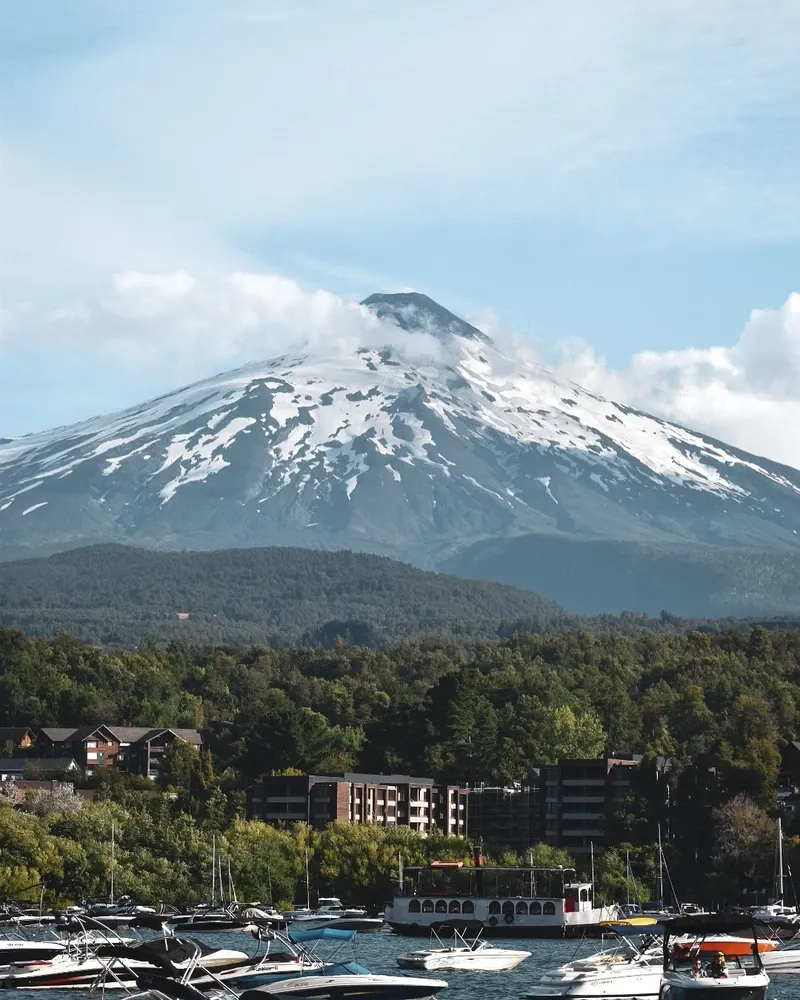
Most visitors access Villarrica Volcano from the nearby town of Pucón, which serves as the primary base for excursions. From the town center, travelers cover a 19-kilometer route to reach the base ski center where climbs begin.
📍 Southern Lake District near Pucón, Chile
Driving from Pucón covers a distance of 19 kilometers to the volcano base. The route begins with 9 kilometers of paved road before transitioning to a steep gravel surface. Drivers should be prepared for changing conditions on the upper section. A 4x4 vehicle is highly recommended during the winter months. Parking is available at the base ski center where summit hikes commence.
The vast majority of visitors reach the volcano via organized tour shuttles. These vehicles depart directly from agency offices in Pucón or pick passengers up at their local hotels. The 19-kilometer drive safely navigates the steep gravel sections leading to the ski center. This transport is bundled into the overall summit package, eliminating the need to arrange separate transit.
Hiring a taxi provides direct, private transport from the Pucón town center up to the base ski center. The 19-kilometer trip climbs steadily toward the volcano and drops passengers exactly where the trailheads begin. This is an efficient alternative for those not taking a guided shuttle. Visitors should arrange a pickup time with their driver for the return trip later in the day.
Travelers coming from outside the region typically take an overnight bus from Santiago to Pucón. This 780-kilometer route runs daily and establishes Pucón as the primary base camp for volcano visits. Passengers sleep through the long transit and arrive ready to arrange local transport to the mountain. From the bus terminal, visitors must secure a taxi, rental car, or tour shuttle for the final 19 kilometers.
For detailed transport options and routes, visit our Directions page.
Save your energy for the steep upper slopes by taking the Juncalillo chairlift at the start of your climb. This optional ride costs between 17,000 and 20,000 CLP. It cuts out approximately 1.5 hours of tedious hiking through loose volcanic ash. You will need that stamina for the 1,400-meter elevation gain ahead.
Avoid reserving your guided climb online before arriving in the Lake District. Booking in person at agency offices in Pucón generally yields better prices, which typically range from 130,000 to 150,000 CLP. Local operators also have the most current information regarding SERNAGEOMIN alert levels and sudden weather changes.
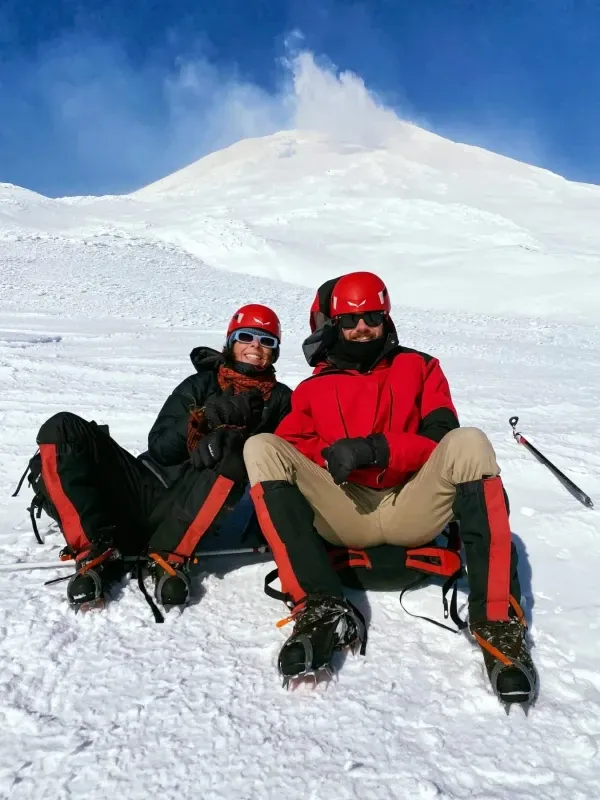
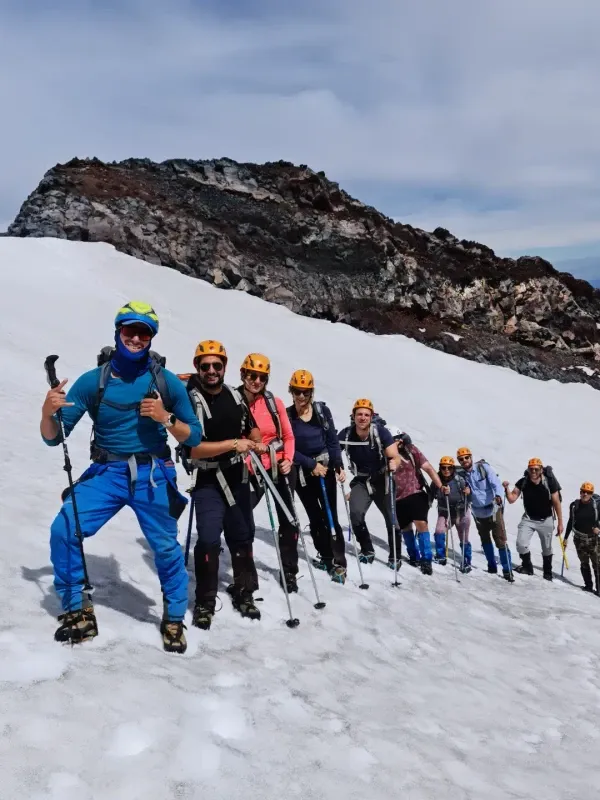
Technical mountain clothing is mandatory for the ascent, and guides will turn away climbers wearing jeans. The 40-square-kilometer glacier creates intense solar glare even on cloudy days. Bring high-quality sunglasses and apply sunscreen liberally throughout the 7 to 9-hour hike. Carry at least 2 to 3 liters of water since no facilities exist on the mountain.
The descent often involves sliding down the snowy volcanic slopes on small plastic sleds. This process is fast and requires active control to prevent accidents. You must use your provided ice axe as a manual brake to regulate your speed. Pay close attention to your guide's instructions before starting the slide.
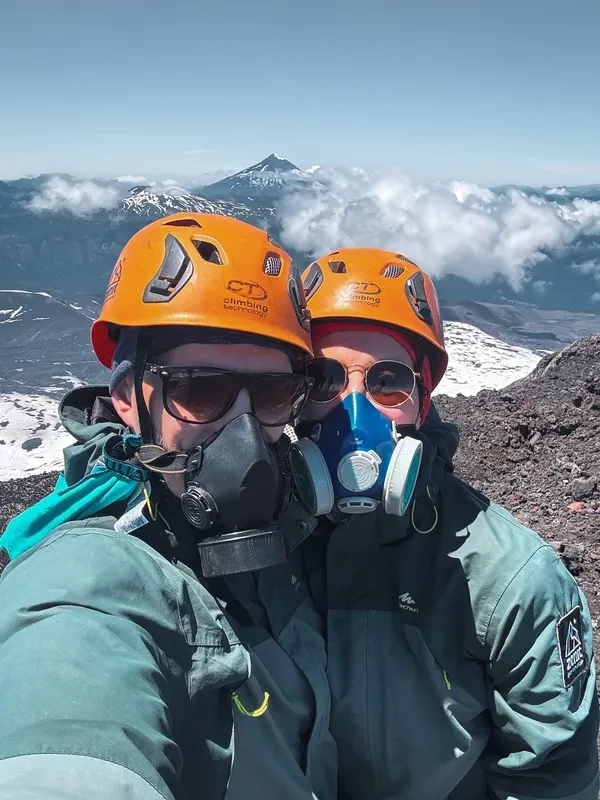
Standing on the rim of the 200-meter-wide crater exposes you to heavy sulfur dioxide emissions. The gas can be overwhelming, especially when the wind shifts. Guides typically provide specialized gas masks for the final summit push. You must wear this equipment exactly when instructed to safely view the intermittent lava lake.
Photography is permitted throughout the national park, but drones are strictly prohibited without prior written authorization from CONAF. Additionally, single-use plastics and alcoholic beverages are banned on the mountain. Respect the sacred Mapuche status of Rucapillán by adhering strictly to all park ranger regulations and staying on designated trails.
These Japanese-style hot springs sit within a lush temperate rainforest canyon. The site provides a relaxing environment where climbers can soak in thermal waters after completing the strenuous summit hike.
This protected area is famous for its ancient Araucaria, or Monkey Puzzle, forests. Visitors can explore extensive trail systems that lead upward to several scenic high-altitude lagoons.
Underground rivers feed these natural pools and bright turquoise waterfalls. The site provides a highly visual natural attraction that requires minimal physical effort to access.
Read what travelers share about their experience visiting Villarrica Volcano — from practical tips to personal highlights.
Guided tours typically cost between 130,000 and 150,000 CLP per person, which covers necessary gear and transport. You must also pay an 11,000 CLP entrance fee for adult foreigners. Taking the optional Juncalillo chairlift adds 17,000 to 20,000 CLP to your total expenses.
The vast majority of visitors must hire a certified mountain guide to secure the mandatory CONAF permit. Only professional climbers holding specific certifications and permits are allowed to attempt the summit unguided.
A full summit hike takes between 7 and 9 hours to complete. You can save about 1.5 hours of hiking through volcanic ash by taking the chairlift at the start of the trail.
The park is open Tuesday through Sunday from 08:30 to 17:30, with the last entry permitted at 16:00. December to March provides the most stable weather and clear summit views, while June to August brings heavy snow and frequent route closures.
The ski center at the base is 19 kilometers from the Pucón town center. Most guided tours include a 45-minute shuttle ride, but you can also take a taxi for approximately 11,000 CLP or drive a rental car. The road is paved for the first 9 kilometers before turning into a steep gravel path.
Climbers must wear waterproof layers, thermal clothing, and sturdy hiking boots, while strictly avoiding moisture-retaining jeans. You need to pack at least 2 to 3 liters of water, high-energy snacks, sunscreen, and high-quality sunglasses to protect against intense glacier glare.
The summit hike requires navigating a 1,400-meter elevation gain over steep snow and loose rock, making it unsuitable for elderly visitors with mobility or heart issues. Many tour operators enforce a minimum age of 18 for the climb. Families with older children can explore the lower trails and volcanic caves instead.
Visibility of the 1,250°C lava lake is intermittent and depends entirely on current gas levels and volcanic activity. It is not guaranteed on every trip. Safety dictates that climbing is only permitted when the SERNAGEOMIN alert level is Green or Yellow.
Browse verified tours with free cancellation and instant confirmation.
Find Tours